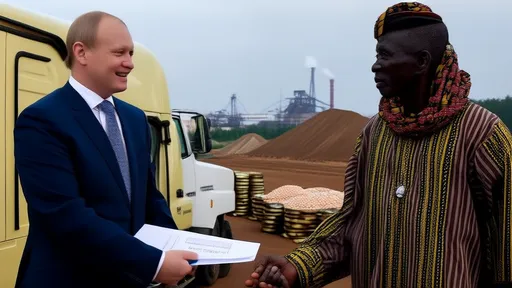
Russia has recently intensified its economic and political engagement with Africa through a controversial yet strategic initiative: offering free grain shipments in exchange for mining rights across the continent. This move, framed as humanitarian aid, underscores Moscow’s broader ambition to secure long-term access to Africa’s vast mineral wealth while countering Western influence in the region. The arrangement, however, has sparked debates about the true motives behind Russia’s generosity and its implications for African sovereignty.
The Grain-for-Minerals Deal: A Win-Win or Exploitation?
At first glance, Russia’s proposition appears mutually beneficial. African nations grappling with food insecurity due to climate change, conflict, and economic instability receive much-needed grain supplies. In return, Russia gains preferential access to untapped reserves of cobalt, gold, uranium, and other critical minerals essential for its industrial and military sectors. Countries like Mali, Burkina Faso, and the Central African Republic—all facing severe food shortages—have been among the first to sign such agreements. Yet, critics argue that these deals disproportionately favor Moscow, locking African governments into lopsided contracts that could undermine their economic independence for decades.
The Geopolitical Chessboard
This initiative is not occurring in a vacuum. Russia’s grain diplomacy aligns with its broader strategy to expand its footprint in Africa, a continent increasingly viewed as a battleground for global powers. By positioning itself as a reliable partner amid Western aid cuts and perceived neglect, Moscow is capitalizing on anti-colonial sentiment to weaken ties between African nations and Europe or the United States. The Wagner Group’s involvement in securing mining sites further complicates the picture, blurring the lines between humanitarian aid and private military expansion. For African leaders, the allure of immediate relief may outweigh long-term risks, but the geopolitical ramifications are hard to ignore.
African Perspectives: Sovereignty vs. Survival
Within Africa, reactions to the grain-for-minerals scheme are deeply polarized. Proponents, including several heads of state, praise Russia for offering "no-strings-attached" aid compared to Western programs tied to governance reforms. Others, however, warn of a new form of resource colonialism disguised as benevolence. Civil society groups point to opaque contract terms and the lack of public scrutiny, raising concerns about corruption and environmental degradation. In Zimbabwe, for instance, reports of Russian firms bypassing local labor laws to extract platinum have fueled resentment. The dilemma for many African governments boils down to a harsh reality: feed starving populations today or safeguard resources for future generations.
Global Reactions and the Future of Aid
The international community has responded with skepticism. The EU and U.S. have accused Russia of using food as a political weapon, echoing tactics employed during the Cold War. Meanwhile, China—Africa’s largest trading partner—has remained conspicuously silent, likely assessing how the move affects its own mining interests on the continent. As climate change exacerbates food crises, such barter-style deals may become more common, rewriting the rules of foreign aid. Whether Africa’s minerals will translate into sustainable development or further entrench dependency, however, remains an open question—one that could define the continent’s trajectory in the 21st century.

By /Aug 12, 2025

By /Aug 12, 2025
By /Aug 12, 2025

By /Aug 12, 2025

By /Aug 12, 2025

By /Aug 12, 2025

By /Aug 12, 2025
By /Aug 12, 2025
By /Aug 12, 2025
By /Aug 12, 2025
By /Aug 12, 2025

By /Aug 12, 2025

By /Aug 12, 2025
By /Aug 12, 2025

By /Aug 12, 2025

By /Aug 12, 2025

By /Aug 12, 2025

By /Aug 12, 2025

By /Sep 15, 2025
By /Aug 12, 2025