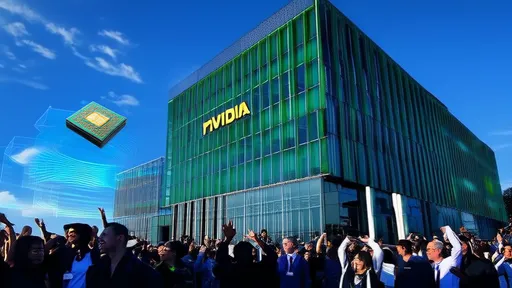
The tech world is witnessing an unprecedented surge in the valuation of Nvidia, the semiconductor giant whose market capitalization has now eclipsed the $5 trillion mark. This staggering milestone underscores the company’s dominance in the AI chip market, fueled by an insatiable global demand for advanced computing power. As industries from healthcare to automotive scramble to integrate artificial intelligence into their operations, Nvidia’s graphics processing units (GPUs) have become the backbone of this transformation.
What makes this achievement even more remarkable is the speed at which it has been realized. Just a few years ago, Nvidia was primarily known for its high-performance gaming GPUs. Today, its chips are the lifeblood of AI research, data centers, and autonomous systems. The company’s strategic pivot toward AI and machine learning has positioned it as the undisputed leader in a sector that is reshaping the global economy.
The Engine Behind the AI Revolution
Nvidia’s rise to a $5 trillion valuation is no accident. The company’s GPUs have become the gold standard for training complex AI models, offering unparalleled processing power and efficiency. Tech giants like Microsoft, Google, and Amazon are among the biggest customers, relying on Nvidia’s hardware to power their cloud-based AI services. The explosive growth of generative AI, exemplified by tools like ChatGPT, has further accelerated demand, creating a near-frenzy for Nvidia’s latest chips.
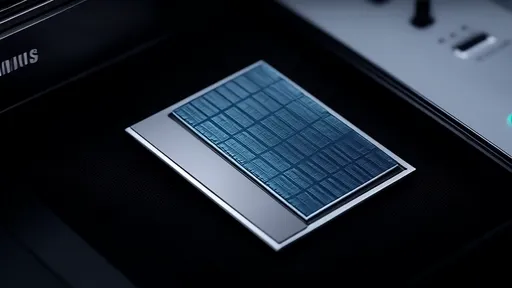
Industry analysts point to the H100 Tensor Core GPU as a key driver of this success. Designed specifically for AI workloads, the H100 delivers performance leaps that were unimaginable just a few years ago. Data centers worldwide are racing to upgrade their infrastructure with these chips, often facing months-long waiting lists due to supply constraints. Nvidia’s ability to consistently innovate and push the boundaries of what’s possible in semiconductor technology has cemented its reputation as the industry’s pacesetter.
Supply Challenges and Geopolitical Tensions
Despite the soaring demand, Nvidia faces significant hurdles in meeting the needs of its customers. The global semiconductor supply chain remains fragile, with production bottlenecks and material shortages causing delays. Additionally, escalating tensions between the U.S. and China have led to export restrictions on advanced AI chips, complicating Nvidia’s ability to serve one of its largest markets. The company has responded by developing modified versions of its flagship products tailored to comply with regulatory requirements, but the long-term implications of these trade barriers remain uncertain.
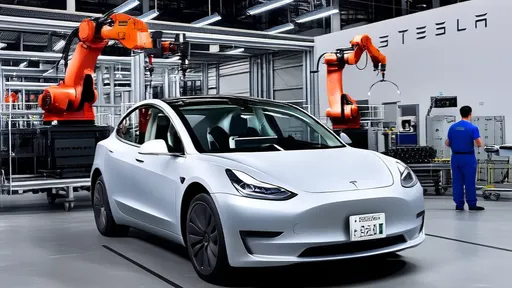
Meanwhile, competitors are circling, eager to carve out their share of the lucrative AI chip market. AMD and Intel are investing heavily in their own GPU architectures, while tech behemoths like Google and Tesla are designing custom AI chips in-house. Yet, Nvidia’s first-mover advantage and its robust software ecosystem, including platforms like CUDA, give it a formidable edge that won’t be easily eroded.
The Future of AI and Nvidia’s Role
As AI continues to evolve, Nvidia shows no signs of slowing down. The company is already working on its next-generation chips, promising even greater performance and energy efficiency. Beyond hardware, Nvidia is expanding its reach into AI software and services, aiming to provide end-to-end solutions for enterprises adopting artificial intelligence. Its Omniverse platform, for instance, is positioning the company as a key player in the metaverse and digital twin technologies.
The $5 trillion valuation is more than just a financial milestone—it’s a testament to the transformative power of AI and Nvidia’s central role in this revolution. With every industry from healthcare to finance increasingly reliant on AI-driven insights, the demand for Nvidia’s technology is poised to grow even further. Whether the company can maintain its breakneck pace of innovation and market dominance remains to be seen, but for now, Nvidia stands as the undisputed king of the AI chip era.

By /Aug 12, 2025

By /Aug 12, 2025

By /Aug 12, 2025
By /Aug 12, 2025
By /Aug 12, 2025

By /Aug 12, 2025

By /Aug 12, 2025

By /Aug 12, 2025

By /Aug 12, 2025

By /Aug 12, 2025

By /Aug 12, 2025

By /Aug 12, 2025

By /Aug 12, 2025

By /Aug 12, 2025
By /Aug 12, 2025

By /Aug 12, 2025

By /Aug 12, 2025

By /Aug 12, 2025

By /Sep 15, 2025
By /Aug 12, 2025