In a landmark move that signals a new era for both robotics and elderly care, the global technology sector has witnessed the signing of the world's first order for ten thousand humanoid embodied intelligent robots. This unprecedented deal, valued in the billions, is squarely aimed at revolutionizing the domestic health and wellness landscape for senior citizens. The agreement, struck between a consortium of leading aged-care providers and a pioneering robotics firm, represents not merely a commercial transaction but a profound commitment to deploying cutting-edge technology to address one of society's most pressing challenges: dignified aging in place.
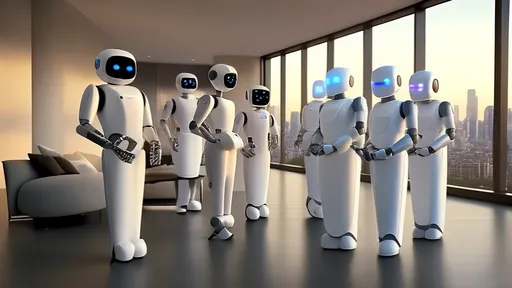
The core of this initiative lies in the deployment of these sophisticated machines into private homes and assisted living facilities. These are not the simple, single-task machines of the past. These humanoid robots, powered by the latest advancements in embodied AI, are designed to be multi-functional companions and caregivers. Their form factor, deliberately designed to be approachable and non-threatening, allows them to navigate the complex and cluttered environments of a typical home with an agility that previous generations of robots could only dream of. They are engineered to understand and respond to natural language, interpret subtle emotional cues, and learn the unique routines and preferences of their human charges.
The applications within the home wellness scenario are vast and deeply impactful. One of the primary functions will be physical assistance, helping individuals with reduced mobility to stand up from a chair, get in and out of bed, or retrieve objects from another room. This directly mitigates fall risks, a leading cause of hospitalization among the elderly. Beyond brute strength, their dexterous hands can perform delicate tasks like preparing simple meals, managing medication schedules by dispensing pills at the correct times, and even assisting with grooming. This level of support empowers individuals to maintain a greater degree of independence for far longer, preserving their sense of autonomy and self-worth.
Perhaps even more revolutionary is the role these entities will play in combating loneliness and cognitive decline. Equipped with advanced conversational AI, they can engage in meaningful dialogue, tell stories, play memory-enhancing games, and facilitate video calls with family members. They can monitor vital signs through integrated sensors, subtly and continuously, alerting remote human caregivers or emergency services only when a potential anomaly is detected, thus providing peace of mind without constant surveillance. This 24/7 passive monitoring system is a game-changer, offering a safety net that allows seniors to live alone safely while giving their families unprecedented reassurance.
The economic implications of this mass deployment are staggering. The senior care industry, particularly in nations with rapidly aging populations like Japan, South Korea, and many in Western Europe, is facing a critical shortage of human caregivers. This technology is not seen as a replacement for human compassion but as a vital force multiplier. By automating routine physical tasks and constant monitoring, these robots free up human professionals to focus on the irreplaceable elements of care: emotional support, complex medical decision-making, and genuine human connection. This model promises to make high-quality care more accessible and affordable for a much larger segment of the population.
Of course, an undertaking of this scale does not come without its significant challenges and ethical considerations. Data privacy and security are paramount concerns; these robots will have access to the most intimate details of a person's life and health. The consortium has emphasized a "privacy-by-design" approach, with all sensitive data being encrypted and processed locally on the robot wherever possible, rather than being streamed to cloud servers. Furthermore, the psychological impact of long-term human-robot interaction is a fertile area for ongoing study. Ensuring that these relationships supplement rather than supplant human contact is a critical design and deployment principle that all parties involved have sworn to uphold.
The signing of this order is more than a headline; it is a definitive signal that embodied AI has moved out of the laboratory and into the real world in a commercially viable way. It validates years of research and investment and sets a powerful precedent for other sectors to follow. The success of this ten-thousand-robot fleet will be closely watched by industries ranging from manufacturing and logistics to retail and hospitality. If these intelligent machines can successfully integrate into the delicate and unpredictable ecosystem of the home, it proves their readiness for almost any environment.
In conclusion, this historic order marks a pivotal moment where science fiction edges decisively into scientific fact. It is a bold bet on a future where technology serves humanity not just through screens and speakers, but through physical presence and action. The focus on home wellness for the aging population is a profoundly human-centric application of automation, one that seeks to leverage our greatest technological achievements to uphold our most fundamental human values: dignity, safety, companionship, and the right to age in the place we call home. The world will be watching, waiting to see how this army of helpers changes the face of care, and ultimately, the experience of growing old.
By /Aug 27, 2025

By /Aug 27, 2025

By /Aug 27, 2025
By /Aug 27, 2025
By /Aug 27, 2025

By /Aug 27, 2025

By /Aug 27, 2025

By /Aug 27, 2025
By /Aug 27, 2025

By /Aug 27, 2025

By /Aug 27, 2025

By /Aug 27, 2025

By /Aug 27, 2025
By /Aug 27, 2025

By /Aug 27, 2025

By /Aug 27, 2025
By /Aug 27, 2025
By /Aug 27, 2025

By /Aug 27, 2025
By /Aug 27, 2025