NVIDIA Huang Renxun: The Next Wave of AI is Embodied Intelligence, with Robotics as a Core Growth Area

Aug 27, 2025 By

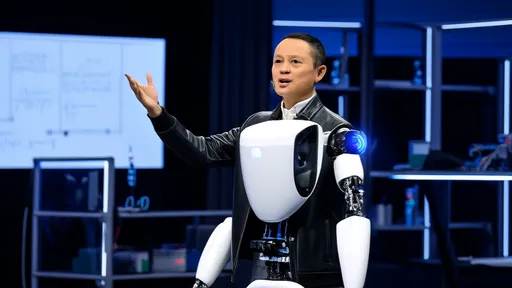
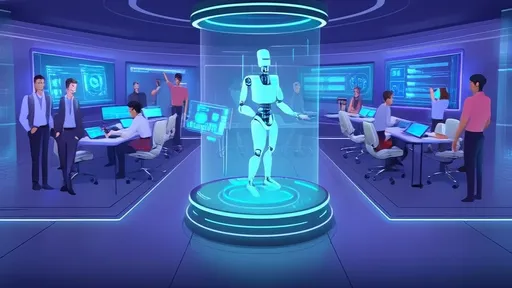
NVIDIA CEO Jensen Huang recently made waves in the tech community with his bold proclamation that the next frontier of artificial intelligence lies in embodied AI, with robotics positioned as the central growth vector. Speaking at a major industry event, Huang outlined a vision where AI transcends its current digital confines and begins to interact with and learn from the physical world. This shift, he argues, represents not merely an incremental improvement but a fundamental reimagining of AI's capabilities and applications.


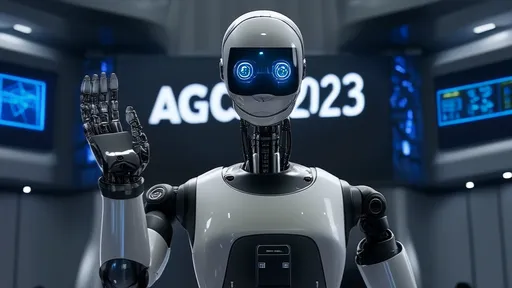
The concept of embodied intelligence refers to artificial agents that possess a physical form and can perceive, learn from, and act upon their environment. Unlike current AI models that primarily process data in a virtual space, embodied AI would bridge the digital and physical divide. Huang emphasized that this evolution is critical for developing systems that can operate in the complex, unstructured realities of human life. He pointed out that while large language models have demonstrated remarkable prowess in understanding and generating text, they lack a grounded understanding of the world that physical interaction provides.


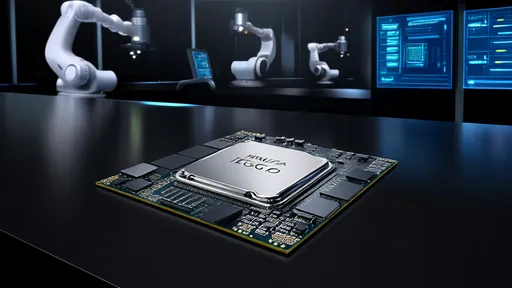
According to Huang, robotics technology serves as the essential platform for this embodied intelligence revolution. He highlighted that advancements in robotics are creating the necessary hardware and software synergy to support sophisticated AI applications. NVIDIA itself has been heavily investing in this convergence, developing platforms that combine powerful computing, advanced sensors, and intelligent algorithms. These investments are aimed at creating robots that can perform tasks with greater autonomy, adaptability, and precision.


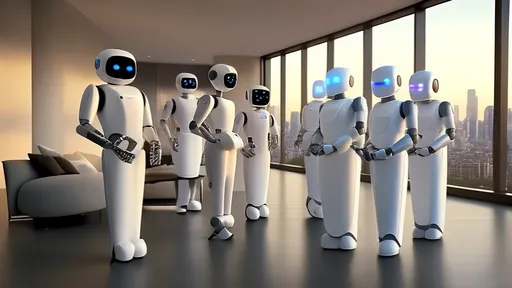
The implications of this shift are profound for numerous industries. In manufacturing, embodied AI could lead to fully autonomous factories where robots not only perform repetitive tasks but also troubleshoot issues and optimize processes in real-time. The logistics and supply chain sector might see warehouses operated entirely by intelligent robotic systems that can adapt to changing inventory needs and navigate complex environments without human intervention.


Healthcare represents another frontier where embodied AI could make significant impacts. Surgical robots with advanced AI capabilities could assist surgeons with unprecedented precision, while caregiving robots might help elderly populations maintain independence. Huang specifically mentioned the potential for AI-powered diagnostic systems that can physically interact with patients, gathering data beyond what's possible through traditional medical interfaces.


What makes this technological leap possible now, after decades of robotics research? Huang identified several converging factors: the exponential growth in computing power following Moore's Law, breakthroughs in machine learning algorithms, and the availability of massive datasets for training. Most importantly, he stressed the development of simulation technologies that allow AI systems to train in virtual environments before deploying in the real world. This simulation-to-reality approach dramatically accelerates learning while reducing risks and costs associated with physical training.


NVIDIA's own Omniverse platform exemplifies this approach. The company has created a virtual environment where developers can train and test robotic systems under countless scenarios and conditions. This digital twin technology enables rapid iteration and refinement of AI algorithms without the constraints of physical prototyping. Huang described this as a crucial enabler for the widespread adoption of embodied AI systems.


The economic implications of this technological shift could be substantial. Huang projected that the embodied AI market might eventually dwarf the current AI market focused on software applications. He envisions a future where intelligent physical systems become ubiquitous across industries, creating new business models and revenue streams. This transition could also address workforce challenges in sectors facing labor shortages by augmenting human capabilities with robotic assistance.


However, Huang also acknowledged the significant challenges that remain. Developing AI systems that can safely and reliably operate in unpredictable real-world environments requires overcoming substantial technical hurdles. The complexity of human environments, with their infinite variables and unexpected events, presents a much greater challenge than controlled digital spaces. Additionally, ethical considerations around autonomous systems and job displacement will require careful navigation and thoughtful regulation.


Despite these challenges, Huang remains optimistic about the timeline for adoption. He suggested that we might see meaningful implementations of embodied AI within the next three to five years, with broader adoption following throughout the decade. The pace of advancement, he noted, has accelerated beyond most predictions, driven by intense competition and collaboration across the tech industry.


For developers and companies looking to position themselves in this emerging field, Huang emphasized the importance of building expertise at the intersection of AI, robotics, and edge computing. He suggested that successful implementations will require multidisciplinary teams that understand both software algorithms and physical system design. NVIDIA's strategy involves providing the tools and platforms to lower barriers to entry while continuing to push the boundaries of what's possible through its own research and development.


The race toward embodied intelligence represents what Huang calls "AI's second wave" – moving beyond pattern recognition in data to actual physical engagement with the world. This transition mirrors the evolution of natural intelligence, which developed through interaction with environment and adaptation to physical constraints. By embracing this approach, Huang believes we can create AI systems that are not only more capable but also more aligned with human needs and experiences.


As the technology continues to develop, we can expect to see increasingly sophisticated applications emerge across sectors. From agricultural robots that can identify and harvest ripe produce to construction systems that can adapt building plans based on real-time site conditions, the possibilities appear nearly limitless. Huang's vision suggests that the most transformative applications of AI may not be in what it can think, but in what it can do – physically interacting with and improving our world.


Recommend Posts
Tech

Musk Announces Open Sourcing of Grok 2.5 AI Model, Plans to Open Source Grok 3 in Six Months

By /Aug 27, 2025

In a move that sent ripples through the artificial intelligence community, Elon Musk's xAI has officially open-sourced its Grok-2.5 model. The announcement, made via a series of posts on the X platform, marks a significant strategic pivot for the company, placing it firmly in the growing camp of open AI development. This decision is not an isolated event but part of a broader, more ambitious roadmap, with Musk boldly declaring that the more powerful Grok-3 model will follow suit and be released to the public within the next six months.
Tech

Huawei Cloud's Organizational Restructuring, Responds by Allocating More Resources to AI and Computing Power Industries

By /Aug 27, 2025

Huawei Cloud has announced a significant organizational restructuring, signaling a strategic pivot toward artificial intelligence and computing power industries. The reshuffle comes as the cloud computing arm of the Chinese tech giant seeks to sharpen its competitive edge in the rapidly evolving digital infrastructure sector. Industry analysts view the move as a response to both global technological trends and domestic policy directions that prioritize advancements in AI and high-performance computing.
Tech

China's Computing Power Scale Grows at an Annual Rate of 30%, Experts Forecast AI Contribution to GDP to Exceed 11 Trillion Yuan by 2035

By /Aug 27, 2025

China's computing power infrastructure is expanding at an unprecedented pace, with recent data revealing a staggering 30% annual growth rate in computational scale. This explosive expansion positions the nation at the forefront of the global artificial intelligence revolution, fueling both domestic technological advancement and international competitiveness. Industry specialists and economic analysts are now projecting that by 2035, AI-driven contributions could inject over 11 trillion yuan into the country's GDP, fundamentally reshaping economic structures and innovation ecosystems.
Tech

Apple Discusses Internal Acquisition of AI Startups Mistral and Perplexity, Cook Open to Large-Scale AI Acquisitions

By /Aug 27, 2025

In a move that has sent ripples through the technology and investment communities, Apple Inc. has reportedly engaged in internal discussions regarding the potential acquisition of two prominent artificial intelligence startups, Mistral AI and Perplexity. This development, sourced from individuals familiar with the matter, signals a significant strategic pivot for the Cupertino-based giant as it seeks to aggressively bolster its capabilities in the rapidly evolving AI landscape.
Tech

NVIDIA Jetson AGX Thor Robotics Chip Now on Sale for $3499, Advancing Embodied Intelligence Development

By /Aug 27, 2025

NVIDIA has officially launched its groundbreaking Jetson AGX Thor robotics chip, now available for purchase at $3,499. This release marks a significant milestone in the advancement of embodied AI, promising to reshape industries from manufacturing to healthcare with its unprecedented computational power and efficiency.
Tech

ByteDance Responds to AI Glasses Rumors: Products Still in Early Exploration Stage

By /Aug 27, 2025

ByteDance, the Chinese tech giant behind the global phenomenon TikTok, has officially addressed swirling industry rumors regarding its potential entry into the AI-powered smart glasses market. In a statement provided to several tech publications, a company spokesperson clarified that while the exploration of such technology is ongoing, any related product is still in its nascent, early-stage development. This measured response tempers the wave of speculation that followed recent trademark filings and hiring patterns, suggesting the company is far from announcing a commercial device.
Tech

State Council Policy Guidance: Deep Integration of Artificial Intelligence with the Real Economy as a Key Focus

By /Aug 27, 2025

The Chinese government has unveiled a sweeping new policy directive aimed at accelerating the integration of artificial intelligence with the real economy, marking a significant step in the nation's technological and industrial strategy. This initiative, emanating from the highest levels of the State Council, underscores a decisive shift from theoretical research and isolated technological advancements towards a holistic, application-driven approach. The core objective is to harness AI's transformative potential to revitalize traditional industries, spawn new business models, and secure a competitive edge in the global economic landscape. This move is not merely an industrial policy but is increasingly viewed as a cornerstone for achieving long-term, high-quality economic development.
Tech

OpenAI Revenue Milestone: Exceeds $1 Billion in July for the First Time

By /Aug 27, 2025

In a landmark achievement that has sent ripples through the technology sector, OpenAI has reportedly surpassed the $1 billion annualized revenue milestone for the first time in July. This staggering figure is not merely a number on a balance sheet; it represents a profound shift in the commercial viability of artificial intelligence and cements OpenAI's position as a dominant force in the burgeoning AI economy. The news, confirmed by sources familiar with the company's internal metrics, underscores the explosive demand for generative AI tools and services that have captivated both the enterprise world and the general public.
Tech

Global Pet Smartphone Debut: AI-Enabled Calls and Health Monitoring, Redefining Human-Pet Interaction

By /Aug 27, 2025

The global pet technology landscape has been fundamentally reshaped this week with the unveiling of a revolutionary smartphone designed exclusively for pets, marking a watershed moment in how humans and animals interact. This isn't merely an incremental upgrade to existing trackers or automated feeders; it represents an entirely new product category built from the ground up with the pet's experience and the owner's peace of mind at its core. The device, a culmination of years of research in animal behavior and artificial intelligence, promises to bridge the communication gap that has existed between species for millennia, offering a glimpse into a future where our companions are no longer silent partners but active participants in a digital dialogue.
Tech

Guangdong-Hong Kong-Macao Greater Bay Area Collaborates to Build AI Industry Ecosystem, AGIS Conference Introduces Zhongshan Sub-forum for the First Time

By /Aug 27, 2025

The Guangdong-Hong Kong-Macao Greater Bay Area has taken a significant step forward in its artificial intelligence ecosystem development with the establishment of Zhongshan's first sub-forum at the annual AGIC (Artificial Intelligence Global Innovation Conference). This strategic move underscores the region's commitment to creating an interconnected innovation network that leverages the unique strengths of each city within the mega-cluster.
Tech

2025 Shenzhen International General AI Conference Opens, Global AI Titans Gather

By /Aug 27, 2025

The 2025 AGIC Shenzhen International General Artificial Intelligence Conference commenced today, marking a pivotal moment in the global AI landscape. Under the theme "Connecting Intelligence, Shaping Tomorrow," the event has drawn an unprecedented gathering of the world's foremost AI pioneers, researchers, industry leaders, and policymakers. The atmosphere at the Shenzhen Convention and Exhibition Center is electric with anticipation as attendees prepare for what many are calling the most significant AI convergence of the decade.
Tech

New Progress in Tesla's Localization Strategy in China: DeepSeek and DouBao Big Models to Integrate into In-Car Systems

By /Aug 27, 2025

Tesla's strategic push into the Chinese market has taken a significant leap forward with the announcement that two of China's leading artificial intelligence models—DeepSeek and Doubao—will be integrated into its vehicle infotainment systems. This move represents a critical component of Tesla's broader localization strategy, tailored specifically to resonate with Chinese consumers and align with regional technological ecosystems. By embedding homegrown AI solutions, Tesla not only enhances the user experience but also strengthens its compliance with China's data and tech sovereignty policies.
Tech

Baidu Globally Launches and Open-Sources Wenxin 4.5 Series Models, Achieving SOTA Performance in Multimodal Benchmark Tests

By /Aug 27, 2025

In a groundbreaking move that is set to reshape the landscape of artificial intelligence, Baidu has globally launched and open-sourced its Wenxin 4.5 series models. This strategic release not only underscores Baidu's commitment to advancing AI technology but also democratizes access to state-of-the-art multimodal capabilities for developers and researchers worldwide. The announcement has sent ripples across the tech community, positioning Baidu at the forefront of the intensifying global AI race.
Tech

World's First 10,000 Humanoid Service Robots Ordered for Home Healthcare Scenarios

By /Aug 27, 2025

In a landmark move that signals a new era for both robotics and elderly care, the global technology sector has witnessed the signing of the world's first order for ten thousand humanoid embodied intelligent robots. This unprecedented deal, valued in the billions, is squarely aimed at revolutionizing the domestic health and wellness landscape for senior citizens. The agreement, struck between a consortium of leading aged-care providers and a pioneering robotics firm, represents not merely a commercial transaction but a profound commitment to deploying cutting-edge technology to address one of society's most pressing challenges: dignified aging in place.
Tech

Stanford Study Warns: Generative AI is Impacting Employment Prospects for Young American Workers

By /Aug 27, 2025

A recent study from Stanford University has sent ripples through economic and policy circles with its stark warning about the disruptive force of generative artificial intelligence on the American workforce. The research, conducted by a team of economists and data scientists, paints a concerning picture for young professionals and recent graduates, suggesting that the very tools heralded as the future of innovation are simultaneously eroding their entry into the labor market.
Tech

The Rise of 'Shadow AI Economy': Report Claims 90% of Workers Purchase AI Tools at Their Own Expense to Boost Efficiency"

By /Aug 27, 2025

The modern workplace is undergoing a silent but profound transformation, driven not by corporate mandate or top-down technological rollout, but by the individual choices of millions of employees. A new and startling trend, dubbed the "Shadow AI Economy," is emerging as workers across industries are increasingly reaching into their own pockets to purchase AI-powered tools, seeking a crucial edge in productivity and efficiency. This grassroots movement represents a fundamental shift in how technology is adopted and valued within organizations.
Tech

NVIDIA Huang Renxun: The Next Wave of AI is Embodied Intelligence, with Robotics as a Core Growth Area

By /Aug 27, 2025

NVIDIA CEO Jensen Huang recently made waves in the tech community with his bold proclamation that the next frontier of artificial intelligence lies in embodied AI, with robotics positioned as the central growth vector. Speaking at a major industry event, Huang outlined a vision where AI transcends its current digital confines and begins to interact with and learn from the physical world. This shift, he argues, represents not merely an incremental improvement but a fundamental reimagining of AI's capabilities and applications.
Tech

AI Programming Track Heats Up: DeepSeek-V3.1 Launched, Alibaba Cloud Introduces Qoder Platform

By /Aug 27, 2025

The artificial intelligence programming landscape is undergoing a seismic shift, marked by the recent unveiling of two significant developments: the release of DeepSeek-V3.1 and the launch of Alibaba Cloud's Qoder platform. These releases are not merely incremental updates but represent substantial leaps forward in the capabilities and accessibility of AI-powered coding assistants, signaling an intensification of competition in a sector that is rapidly becoming central to the future of software development.
Tech

State Council Issues Opinions on Deeply Implementing the AI+" Action Plan, Strengthening 8 Basic Support Capabilities

By /Aug 27, 2025

The State Council of China has unveiled a comprehensive policy document titled "Opinions on Deepening the Implementation of the 'AI Plus' Initiative," marking a significant milestone in the nation's technological advancement strategy. This directive underscores a robust commitment to embedding artificial intelligence across various sectors of the economy and society, aiming to foster innovation, enhance productivity, and maintain competitive leadership in the global AI landscape. The initiative is not merely an isolated effort but part of a broader, cohesive framework designed to synergize with existing national strategies, such as Made in China 2025 and the Digital China initiative, creating a holistic ecosystem for technological transformation.
Tech

China's First Full-Size Bipedal Humanoid Robot Debuts at AGIC Conference by Pudu Robotics

By /Aug 27, 2025

China's robotics landscape witnessed a historic leap forward as Pudu Robotics unveiled the nation's first full-scale bipedal humanoid robot at the recent AGIC (Artificial General Intelligence Conference). The groundbreaking debut marks a significant milestone not only for the Shenzhen-based company but for China's broader ambitions in advanced robotics and artificial intelligence.