China's computing power infrastructure is expanding at an unprecedented pace, with recent data revealing a staggering 30% annual growth rate in computational scale. This explosive expansion positions the nation at the forefront of the global artificial intelligence revolution, fueling both domestic technological advancement and international competitiveness. Industry specialists and economic analysts are now projecting that by 2035, AI-driven contributions could inject over 11 trillion yuan into the country's GDP, fundamentally reshaping economic structures and innovation ecosystems.
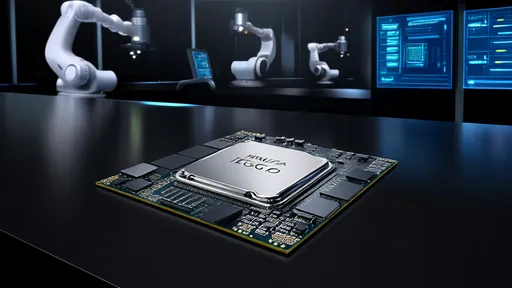
The remarkable growth in computational resources—encompassing data centers, supercomputing facilities, and edge computing networks—serves as the foundational bedrock for AI development. This infrastructure supports everything from basic algorithm training to complex real-time applications across industries such as finance, healthcare, manufacturing, and smart city management. With this robust foundation, Chinese tech firms and research institutions are accelerating innovation, reducing time-to-market for AI solutions, and enhancing the sophistication of intelligent systems.
Economic experts emphasize that this isn't merely a story of technological capacity but of profound economic transformation. The predicted 11 trillion yuan GDP contribution would represent a significant portion of the national economy, driven by productivity gains, new business models, and AI-enabled industries. This growth is expected to permeate both traditional and emerging sectors, creating a ripple effect that boosts efficiency, spawns new markets, and elevates China's role in the global value chain.
Behind these numbers lies a strategic national vision. Government policies have consistently prioritized investments in digital infrastructure, fostering a favorable environment for both public and private sector involvement. Initiatives like the East Data West Computing project exemplify efforts to optimize resource distribution, enhance energy efficiency, and ensure that computational growth aligns with broader economic and environmental goals.
Moreover, the synergy between computing power expansion and AI advancement is creating a virtuous cycle. As AI applications become more complex and widespread, they demand greater computational resources, which in turn drives further investment in infrastructure. This cycle not only sustains growth but also encourages continuous innovation, as businesses and researchers leverage increased capacity to tackle more ambitious projects and solve previously intractable problems.
The implications extend beyond economic metrics. This technological surge is poised to address some of society's most pressing challenges, from healthcare diagnostics and treatment personalization to climate modeling and sustainable urban planning. AI-powered solutions, underpinned by massive computing power, are already demonstrating potential to improve quality of life, resource management, and environmental protection.
However, this rapid growth also presents challenges. The enormous energy consumption required to power computational infrastructure has raised concerns about sustainability and carbon emissions. In response, industry leaders and policymakers are increasingly focusing on green computing initiatives, developing more energy-efficient hardware, optimizing data center operations, and leveraging AI itself to reduce the environmental footprint of technological expansion.
Internationally, China's computing power growth is reshaping global technology dynamics. As the nation strengthens its position in the AI landscape, it influences worldwide standards, research directions, and competitive balances. This development contributes to a more multipolar technological ecosystem, with different regions bringing distinct strengths and approaches to the field of artificial intelligence.
The workforce dimension cannot be overlooked either. The AI revolution demands new skills and specializations, prompting educational institutions and companies to invest heavily in talent development. From data scientists and AI ethicists to computational engineers and integration specialists, a new generation of professionals is emerging to support and guide this technological transformation.
Looking toward 2035, the trajectory suggests that computing power and AI will become increasingly intertwined with national economic health. The projected 11 trillion yuan GDP contribution would represent not just financial value but the culmination of strategic planning, infrastructure investment, and innovation ecosystem development. It signals China's transition toward an intelligence-driven economic model that could redefine global competitiveness in the coming decades.
While these projections are optimistic, they are grounded in observable trends and current growth patterns. The 30% annual expansion in computing power provides tangible evidence of the capacity to support AI advancement at scale. As both hardware and software continue to evolve, the potential applications and economic impacts will likely expand beyond current estimations.
This transformation places China at a fascinating juncture—balancing rapid technological growth with sustainable development, domestic innovation with global collaboration, and economic ambition with social responsibility. How the nation navigates these tensions will influence not only its own future but the broader trajectory of artificial intelligence development worldwide.
Ultimately, the story of China's computing power growth and its AI economic potential represents a microcosm of broader technological evolution—where infrastructure enables innovation, innovation drives economic value, and economic value fuels further advancement. As we approach 2035, this virtuous cycle promises to reshape industries, societies, and international relations in profound and unpredictable ways.

By /Aug 27, 2025

By /Aug 27, 2025

By /Aug 27, 2025

By /Aug 27, 2025
By /Aug 27, 2025

By /Aug 27, 2025

By /Aug 27, 2025

By /Aug 27, 2025

By /Aug 27, 2025

By /Aug 27, 2025

By /Aug 27, 2025

By /Aug 27, 2025
By /Aug 27, 2025

By /Aug 27, 2025

By /Aug 27, 2025

By /Aug 27, 2025
By /Aug 27, 2025

By /Aug 27, 2025

By /Aug 27, 2025

By /Aug 27, 2025