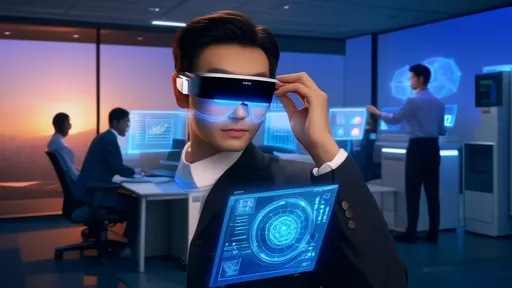
ByteDance, the Chinese tech giant behind the global phenomenon TikTok, has officially addressed swirling industry rumors regarding its potential entry into the AI-powered smart glasses market. In a statement provided to several tech publications, a company spokesperson clarified that while the exploration of such technology is ongoing, any related product is still in its nascent, early-stage development. This measured response tempers the wave of speculation that followed recent trademark filings and hiring patterns, suggesting the company is far from announcing a commercial device.
The rumor mill began churning in earnest when eagle-eyed analysts noticed ByteDance had filed patents and trademarks in multiple international jurisdictions related to wearable technology and optical devices. These filings, often a precursor to product development, included schematics for glasses-like apparatuses with embedded cameras, microphones, and connectivity modules. Furthermore, job postings from ByteDance's hardware division, Pico, seeking experts in augmented reality (AR), optical engineering, and human-computer interaction added significant fuel to the fire. This combination of legal and hiring activity painted a picture of a company seriously investing in a new hardware category beyond its successful VR headsets.
However, the company's latest communication serves as a reality check. The spokesperson emphasized that their work is purely exploratory at this point. This phase involves extensive research and development, prototyping, and internal testing to determine the technological feasibility and, more importantly, the market viability of such a product. The statement highlighted the significant technical hurdles that remain, particularly in miniaturizing the powerful processors and sensors required for a compelling AR experience into a form factor that is both stylish and comfortable for all-day wear. Battery life, a perennial challenge for all wearable tech, was also noted as a key area of focus and difficulty.
This cautious approach is notably prudent given the chequered history of smart glasses in the consumer market. Google's initial foray with Google Glass a decade ago serves as a stark cautionary tale; the product was ultimately hobbled by its high price, limited functionality, and significant public backlash over privacy concerns. The specter of a "glasshole" culture and the unease of being recorded without consent created a social stigma the technology has struggled to shake. More recent efforts, like Snap's Spectacles, have found a niche but have failed to achieve mainstream adoption, often being perceived more as fashionable toys than essential tech tools.
For ByteDance, the strategic rationale for entering this space is nevertheless compelling. The company's core empire is built on content creation and social interaction—realms that could be fundamentally transformed by immersive, hands-free technology. Imagine TikTok videos generated not by holding a phone but through a simple voice command or a blink of an eye, offering a truly first-person perspective. Smart glasses could serve as the ultimate content capture device, seamlessly integrating with the company's powerful algorithm-driven platforms. Furthermore, controlling the hardware layer would give ByteDance even greater insight into user behavior and a new, intimate channel for delivering its services and advertisements.
The potential integration with Pico, ByteDance's virtual reality subsidiary, cannot be overlooked. While Pico VR headsets are dedicated immersive devices, a pair of AR smart glasses would represent the complementary, all-day wearable strategy. This two-pronged hardware approach would allow ByteDance to cover the entire spectrum of extended reality (XR), from fully virtual environments to digital information overlaid onto the real world. This would position them as a direct competitor to Meta's ambitious metaverse plans, which also encompass both VR and AR product lines.
Yet, the path forward is littered with challenges beyond just engineering. The spokesperson's emphasis on the "early exploration" stage likely also encompasses the complex web of regulatory and privacy issues that such a device would inevitably encounter. Data privacy is a paramount concern globally, and a device equipped with always-on cameras and microphones would be a regulatory nightmare if not handled with extreme care. ByteDance itself has faced intense scrutiny over its data handling practices concerning TikTok. Launching a product that could be perceived as the ultimate surveillance tool would require a flawless and transparent approach to privacy, likely involving on-device processing and clear, user-controlled data permissions to gain public trust.
Market timing is another critical factor. The technology world is currently in a fervent wait for Apple's long-rumored AR/VR headset, a product expected to set a new benchmark for the category. Other tech behemoths like Google, with its new partnership with Samsung, and Meta are also deep in development. ByteDance's statement allows it to calmly observe the market's reaction to these upcoming launches, learn from their successes and missteps, and adjust its own strategy accordingly without the pressure of having a product already on the market.
In conclusion, ByteDance's confirmation that it is exploring AI glasses technology confirms the industry's suspicions about its ambitions but firmly dashes any hopes or fears of an imminent launch. The statement is a classic strategy: acknowledge the innovation to excite investors and talent, while managing expectations to avoid the pitfalls of hype. The company is clearly playing the long game, understanding that the winner in the AR wearables race will not be who gets to market first, but who delivers a product that is technologically seamless, socially acceptable, and genuinely useful. For now, the world will have to wait as ByteDance's engineers and designers work behind closed doors, slowly bringing their vision of the future into focus.

By /Aug 27, 2025

By /Aug 27, 2025

By /Aug 27, 2025

By /Aug 27, 2025

By /Aug 27, 2025
By /Aug 27, 2025

By /Aug 27, 2025

By /Aug 27, 2025
By /Aug 27, 2025

By /Aug 27, 2025

By /Aug 27, 2025

By /Aug 27, 2025

By /Aug 27, 2025

By /Aug 27, 2025

By /Aug 27, 2025

By /Aug 27, 2025

By /Aug 27, 2025

By /Aug 27, 2025

By /Aug 27, 2025

By /Aug 27, 2025