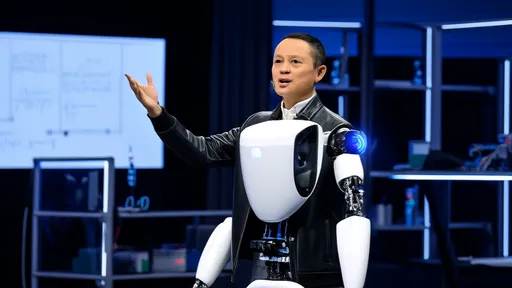
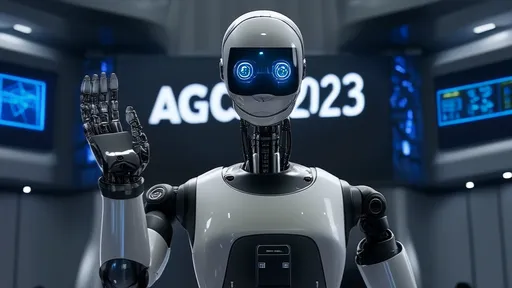
China's robotics landscape witnessed a historic leap forward as Pudu Robotics unveiled the nation's first full-scale bipedal humanoid robot at the recent AGIC (Artificial General Intelligence Conference). The groundbreaking debut marks a significant milestone not only for the Shenzhen-based company but for China's broader ambitions in advanced robotics and artificial intelligence.
The robot, standing at approximately 170 centimeters tall with a human-like proportions and movement capabilities, represents years of intensive research and development. Its sophisticated design integrates advanced actuators, high-precision sensors, and cutting-edge balance algorithms that enable remarkably stable bipedal locomotion across varied surfaces. Observers at the demonstration noted its ability to navigate stairs, uneven terrain, and even recover gracefully from deliberate pushes—capabilities that have traditionally challenged humanoid robots.
What distinguishes Pudu's creation from previous humanoid efforts is its comprehensive approach to human-like movement. While many bipedal robots exhibit mechanical or hesitant gaits, this prototype demonstrated fluid, confident motion that closely mimicked natural human walking patterns. The development team achieved this through proprietary neural network controllers trained on vast datasets of human motion capture, combined with reinforcement learning in simulated environments before transferring to physical hardware.
The robot's upper body design showcases equally impressive capabilities, featuring articulated hands with fine motor control that can manipulate objects ranging from delicate electronic components to heavy industrial tools. During the demonstration, it successfully performed tasks requiring precise hand-eye coordination, including pouring liquid without spilling, operating power tools, and even catching objects thrown toward it. These capabilities suggest potential applications far beyond simple locomotion.
Pudu Robotics, previously known for its commercial service robots deployed in restaurants and hotels, has clearly expanded its technological ambitions. Company CEO Felix Zhang revealed that the humanoid project began as a skunkworks operation three years ago, initially employing just five engineers before expanding to a dedicated team of over forty researchers. "We recognized that true general-purpose robotics requires humanoid form factors," Zhang explained. "While wheeled robots excel in structured environments, human spaces are designed for bipedal movement and manipulation."
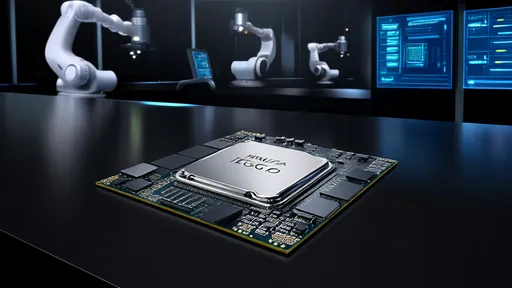
The technological foundations underlying the robot represent significant Chinese advancements in several critical domains. Its vision system incorporates stereo cameras and LiDAR sensors processed through custom neural networks capable of real-time 3D environment mapping. The onboard computing platform, developed in partnership with Chinese chip manufacturers, delivers unprecedented processing power while maintaining energy efficiency—a crucial consideration for mobile robots.
Perhaps most impressively, the robot operates for up to four hours on a single battery charge despite its computational demands and physical exertion. This endurance stems from innovative energy recovery systems that capture and reuse energy during walking cycles, combined with lightweight composite materials throughout its construction. The power management system dynamically allocates energy between computing, sensing, and actuation based on task requirements.
Industry analysts present at the unveiling expressed surprise at both the timing and sophistication of Pudu's announcement. Dr. Alicia Chen, robotics researcher at Tsinghua University, noted that "most observers expected Chinese humanoid robots to remain several years behind Western and Japanese counterparts. This demonstration suggests the gap has narrowed dramatically, particularly in dynamic balance and energy efficiency."
The development comes amid growing national investment in robotics and artificial intelligence. Chinese government initiatives have prioritized humanoid robotics as a strategic technology, with substantial funding allocated through the Made in China 2025 initiative and subsequent industrial policies. This support has accelerated research across academia and private industry, though few expected such rapid progress from a company known primarily for service robotics.
Pudu's approach differs from many humanoid projects in its emphasis on practical utility over purely research-oriented goals. The demonstration included scenarios showing the robot performing household chores, assisting in manufacturing environments, and even providing support for elderly individuals. This focus on real-world applications suggests commercial availability might come sooner than typically expected for such advanced prototypes.
Technical details released indicate the robot incorporates multiple redundant systems for safety-critical operations, including fall prevention algorithms and collision avoidance systems that operate at millisecond response times. These features will be essential for deployment in environments shared with humans, particularly where physical interaction might occur.
The control architecture employs a hierarchical system combining low-level reflex-like responses for balance and stability with higher-level task planning. This design allows the robot to maintain its footing while simultaneously executing complex multi-step operations, such as carrying objects while navigating obstacles. The integration of these systems represents a significant software achievement beyond the mechanical innovations.
Looking forward, Pudu announced plans to establish a developer platform allowing third-party researchers and companies to create applications for the humanoid platform. This ecosystem approach mirrors strategies employed by smartphone manufacturers and could accelerate adoption across multiple industries. Early access programs will begin with selected university research groups and industrial partners later this year.
The unveiling positions China firmly in the global humanoid robotics race, joining companies like Boston Dynamics, Tesla, and Honda. While each approach features different strengths and specializations, Pudu's entry appears particularly strong in energy efficiency and practical task execution. The coming years will likely see increased competition and potentially collaboration between these advancing technologies.
Market implications could be substantial, particularly in manufacturing and logistics where labor shortages have driven automation demand. Humanoid robots offer the potential to perform tasks currently requiring human workers without redesigning existing facilities and workflows. This compatibility with human environments represents a significant advantage over specialized industrial robots.
Ethical considerations surrounding humanoid robotics received attention during the post-demonstration discussion. Pudu's leadership emphasized their commitment to responsible development, including transparent testing protocols and ethical guidelines for deployment. The company has established an external advisory board including ethicists, sociologists, and labor representatives to guide development decisions.
International reaction to the announcement has been mixed, with some observers expressing concerns about technological competition while others highlighting the potential benefits of accelerated innovation. Most analysts agree that credible competition in humanoid robotics will benefit the field overall by driving faster progress and potentially lowering costs through economies of scale.
As with any advanced prototype, significant challenges remain before commercial deployment. Manufacturing at scale, reliability testing, and regulatory approval represent substantial hurdles. However, Pudu's track record of successfully commercializing previous robotics products suggests they understand the path from prototype to product better than many research-focused competitors.
The AGIC demonstration clearly establishes Pudu Robotics as a serious contender in advanced humanoid robotics. Their rapid progress from service robots to full-scale bipedal humanoids demonstrates both technical capability and strategic vision. As development continues, the robotics community will watch closely to see how quickly these impressive capabilities translate into real-world applications.
For China's technology sector, the successful unveiling represents another milestone in the nation's ascent toward technological leadership. Just as Chinese companies have dominated sectors like telecommunications and renewable energy, they now appear positioned to compete at the highest levels of advanced robotics. The global implications of this development will unfold over the coming years as these technologies mature and deploy.

By /Aug 27, 2025

By /Aug 27, 2025

By /Aug 27, 2025

By /Aug 27, 2025
By /Aug 27, 2025

By /Aug 27, 2025

By /Aug 27, 2025

By /Aug 27, 2025

By /Aug 27, 2025

By /Aug 27, 2025

By /Aug 27, 2025

By /Aug 27, 2025

By /Aug 27, 2025

By /Aug 27, 2025

By /Aug 27, 2025

By /Aug 27, 2025
By /Aug 27, 2025

By /Aug 27, 2025

By /Aug 27, 2025
By /Aug 27, 2025